
Intro: At a time when global growth is slowing and trade tensions are reshaping economies, India stands at a crucial inflection point. In this in-depth conversation, senior journalist Mahima Sharma speaks with Dr. Arun Singh, Global Chief Economist at Dun & Bradstreet, to decode India’s FY26 growth outlook. As they speak, they are spanning consumption, investment, services exports, inflation, green capital and human capital. A data-driven lens on where India’s economy is headed and what could alter its course. An exclusive conversation only on Socio-economic Voices at Indiastat. this week…
MS: Given the multiple forecasts for India’s FY26 GDP from different agencies e.g. S&P Global Ratings estimating ~6.5% growth, while some other estimates remain more conservative. What is your base-case projection for India’s GDP growth in 2026? And what are the main upside/downside risks to that base case?
Dr Singh: Our base case for FY26 real GDP growth is 7.5%. Momentum in H1 is strong (Q2 FY26 GDP 8.2% y/y) and private consumption in Q2 was firm (PFCE up 7.9%). We see private consumption and business investments as the main pillars for growth in FY26.
Upside risks:
Downside risks:
MS: How do you view the resilience of India’s domestic demand, especially consumption and investment, in light of global headwinds (e.g. falling global growth, trade tensions)? Can domestic demand alone sustain a 6.5–7% growth trajectory?
Dr Singh: Private consumption rose 7.0% in Q1 FY26 and 7.5% for H1 FY26 – so demand is already firm even before full GST rate-cut impact has moved through consumption. This momentum is expected to get carried into Q3 FY26 consumption accounting for the festive spillover. In Q4 FY26 we expect some normalisation as base effects fade. Urban demand is slowly picking up, RBI’s consumer-confidence Future Expectations Index moved up to 125.6 in the Nov 2025 survey. This means households feel a little better about the economic situation in 2026. Inflation, especially food inflation, is also very low in recent history, boosting purchasing power.
On investment, the story is getting better. Outstanding bank credit increased about 11.5% y/y in November. The private sector is showing intent in early-cycle sectors like cement and power. And new engines like data centres and AI/cloud capacity are coming up, which pulls demand for land, power, construction and high-value electronics; this kind of capex typically creates second-round demand in cement, steel, cables and services.
Taken together, domestic demand should be enough to keep the near-term growth path intact. The main concerns are external – softer global cycle, prolonged trade frictions, geopolitical tensions, an oil price spike and a weaker rupee. In that mix, net exports can turn into a drag and the CAD can widen, especially while early-phase capex still depends on imported machinery and equipment. If these pressures persist, growth may slip toward 6.5%; as localisation ramps up and services/remittances (net invisibles) stay firm, the drag should ease and the trajectory can move back closer to 7%.
MS: Services exports have been a key growth lever for India’s recent economic expansion. Given the mix of global economic slowdown and changing global supply-chain dynamics, what’s your forecast for services exports as a percentage of India’s total exports over the next 3–5 years?
Dr Singh: Services exports are already close to half of India’s total exports. In Nov 2025, services exports were USD35.86 bn out of total exports USD73.99 bn, i.e., about 48.5% of the total. Over the next 3–5 years, we expect this share to edge up to around 52%, driven by the continued outperformance of digitally delivered services and “other business services” (consulting, engineering, design, R&D) that have been rising as per RBI’s BoP data. This is consistent with India’s rising global presence in services (share of world services exports around 4.3%).
Two domestic levers support this trajectory.
First, the expanding GCC (Global Capability Centre) ecosystem –Dun & Bradstreet’s research shows that India has close to 1,900 GCCs today; this could exceed 2,400 by 2030, employing almost 2.5 million professionals – keeps adding higher-value work (AI, cloud, cybersecurity, product engineering) that will add to IT and “other business services” exports.
Second, tourism/travel and transport services have scope to normalise from a low base as airlines capacity, hotels and ancillary services rebuild, which increases the non-IT share of services receipts; the RBI has flagged growth in travel and transport in recent BoP rounds, while boosting tourism (both international and domestic) has been a key focus for the government.
Some tailwinds include a global slowdown in client IT spend, tighter visa regimes, or sharp automation waves which could cap growth in some sub-segments; equally, faster GCC build-outs and travel normalisation would pull the share higher. Overall, the mix looks positive for services, even as merchandise exports expand on electronics, pharma and engineering.
MS: Inflation and monetary policy undergoing shifts globally along with domestic monetary easing underway. What is your view on inflation dynamics for India over the next 2–3 years? Could inflation stay low enough for more rate cuts or will global commodity/energy price shocks derail that?
Dr Singh: We expect headline CPI to average 2.9% in CY25, 3.1% in CY26 and 4.2% in CY27. The near-term drivers are food disinflation, GST rate rationalisation, soft global commodities and moderate core inflation. The November 2025 inflation report (0.7% y/y) shows that the low base and food effects are still working through. As growth normalises and base effects fade, inflation should gently lift towards ~4% by CY27, still inside the target band.
Our base case assumes that RBI will keep rates unchanged at least through Q4 2026. The Bank will want to see full pass-through into lending rates and EMIs, let the durable liquidity operations (OMO purchases and the USD/INR swap) support liquidity and keep a neutral stance on the currency – avoiding cuts that might add pressure on the rupee while imported inflation risks remain. With the official inflation projections still low in FY26 and rising only gradually toward ~4% by early FY27, a steady policy rate helps anchor expectations without sacrificing growth support. If monsoon shocks or oil spikes occur, headline CPI can shoot up; even then, the trajectory should stay muted versus history, given food supply buffers and the disinflation already visible in the data.
MS: Given rising global trade tensions (e.g. tariffs, deglobalisation) and external headwinds, how sustainable is India’s fiscal and external sector stability? What external threshold (e.g. trade deficit-to-GDP ratio / external debt / forex reserves) should policymakers watch to avoid external vulnerability?
Dr Singh: India’s government finances have looked stable even with higher spending on infrastructure in recent years. The Budget numbers are broadly on track and tax collections are helping. Monthly GST collections remain strong, about Rs1.95 lakh crore in October and Rs1.70 lakh crore in November. This shows steady consumption and good tax compliance. If GST stays at these levels, the government can meet its deficit targets even after the income-tax relief announced in 2025.
The external situation is mixed but still comfortable. The current account deficit (CAD) was 1.3% of GDP in Q2 FY26, supported by good earnings from IT/services and strong remittances. India’s forex reserves are high, around USD687 bn in mid-December, enough to cover more than 11 months of imports, providing a strong buffer if global markets become volatile. Services exports, especially IT, remain resilient. Fiscal stability looks sustainable if GST stays strong and capex efficiency remains high. The external sector needs some attention, but with large reserves, improving FDI and robust services exports, India has buffers. The main risks are oil price shocks, weak monsoon/food inflation and global tariff tensions.
Key things to watch:
MS: Given demographic trends and the large young workforce, how important do you think human-capital (especially in sectors like tech, AI, services, R&D) will be vs. traditional infrastructure/manufacturing, for India’s growth through 2030?
Dr Singh: India’s future growth trajectory growth will depend greatly on its people and skills. A large young workforce, rising skills and faster digital adoption mean human capital in tech, AI, services and R&D will carry more weight for growth till 2030. Services already make ~55% of GDP. So, if current trends continue, services can contribute up to 58% of GDP by 2030, led by tech-enabled areas like IT, engineering R&D, finance, health, tourism. On jobs, services today employ ~30% of the workforce and the mix is moving to young, skilled roles. The gig economy is now a bridge between youth employability and formal sector entry. The government officially recognises gig and platform work in the Code on Social Security, 2020 and has begun implementing the new labour codes (Nov 2025), bringing gig workers inside the social-security net (portable IDs, aggregator contributions to a welfare fund). This is a clear policy signal that gig work is an important employment generator.
Productivity is the big lever. OECD estimates that AI can add 0.4–0.9 percentage points to labour-productivity growth per year over a decade if adoption stays steady. With India’s digital rails and rising enterprise spend, this looks achievable; it should compound with skilling and R&D to raise output per worker faster than most capital-heavy sectors. Infrastructure and manufacturing remain essential for capacity, exports and service. But their direct share gains will be slower unless investment and adoption pick up sharply.
MS: What role could green/ESG-driven investment and sustainable infrastructure play in India’s growth trajectory by 2030? Based on current capital flows & policies, what share of GDP could come from green sectors 5 years down the line?
Dr Singh: Green/ESG investment is going to be very important for India’s growth to 2030. Our climate commitments and the National Green Hydrogen Mission mean clean energy is inevitable. Globally, this is now the norm and it helps our exporters stay compliant with the EU’s Carbon Border Adjustment Mechanism (CBAM) which goes into full effect from 1 January 2026 – lower embedded emissions will reduce CBAM costs for steel, aluminium, cement, fertilisers and downstream goods.
Power demand is expected to go up sharply. The Central Electricity Authority (CEA) projects peak electricity demand rising to 366 GW by 2031–32, so India must add generation, storage and transmission fast. On top of that, AI/data centres alone could need ~40–50 TWh extra power by 2030, which pushes us towards firm, reliable green power and grid upgrades.
Capital flows also show momentum. In 2024, about 83% of power-sector investment went to clean energy and India reached 44% non-fossil capacity, moving towards the 50% target. We were also the largest recipient of DFI clean-energy project funding that year and green hydrogen is getting policy support (SIGHT incentives and a target of 5 MMT by 2030) to build new domestic value chains.
On GDP share in five years, estimates are hard to come by, but if current policies continue and investment scales with demand (storage, grid, hydrogen, EVs), green sectors could reach ~3–5% of GDP by FY30.
MS: Given rural consumption, urban demand and shifting income patterns, how do you see inequality and income distribution evolving over the next decade? What would be the socio-economic implications (on poverty, demand stability, fiscal burdens)?
Dr Singh: India’s consumption gap between rural and urban households has started to narrow. The latest Household Consumption Expenditure Survey shows rural monthly per capita consumption rising faster than before and RBI’s work finds convergence in consumption across groups. This suggests inequality in spending is easing. Over the next decade, with rising rural wages, formal jobs and wider social transfers, this trend should continue, though job quality and regional differences need attention.
Poverty has fallen sharply in recent years. The World Bank notes big declines in extreme and lower-middle-income poverty, helped by growth and food transfers. Also, the NITI Aayog’s Multidimensional Poverty Index also shows fewer multidimensionally poor, with faster gains in poorer states. If these policies stay on track, poverty should keep falling, but pockets in UP–Bihar and similar states will still need targeted support in health, education and water.
Demand should be more stable. Rural consumption is holding up and GST collections remain strong, pointing to tax-paid demand that is less volatile. Formal payroll additions (EPFO) also support steady incomes for youth and women, which helps urban discretionary spending. That said, any food-price spike or weak monsoon can dent bottom-tier demand; regular monitoring through HCES/PLFS will be important. Fiscal burdens may become more manageable if formalisation and GST buoy revenues. The Centre and states can then shift from broad subsidies to better-targeted support, for e.g. urban safety nets for migrants and gig workers, skilling for young women and climate-resilient rural jobs, without raising headline deficits. The balance to watch is capex on power, transport and data networks versus social spending in lagging districts.
MS: If global economic growth slows (as projected by some forecasts) and commodities/global oil prices rise, what would that mean for India’s inflation, currency (rupee) and external account? How should India balance growth and macro-stability with such risks?
Dr Singh: If global growth slows but oil/commodities rise, India will face imported inflation through fuel, freight and input costs. Headline CPI could move up from the ~4% zone faster, versus the RBI’s benign path. A bigger oil bill will widen the current account deficit (CAD) and put pressure on the rupee. That said, RBI has large FX reserves and has shown it will smooth volatility; services surplus also cushions the external account.
In such a scenario, on monetary policy, the goal should be to keep inflation near the 4% target and let the rupee be flexible with intervention only to reduce excess volatility. RBI can use OMO purchases/FX swaps to keep liquidity orderly while staying data-dependent on rates.
On fiscal policy, the aim should be to avoid broad fuel subsidies; use targeted support for the poor if food/fuel spikes hit, while protecting capex so growth momentum stays. Strong GST and formalisation should help buffer revenue and reduce fiscal stress.
In terms of supply-side and energy strategy, the government should look to lower the pass-through of global shocks by accelerating renewables, storage and grid and pushing domestic fuel efficiency. India already directs most power capex to clean energy and is attracting development finance; keeping this pace reduces oil sensitivity over time.
Finally, food buffers/logistics should be tightened (PDS, procurement, transport) so fuel shocks do not become broad price spikes. With these steps, we can protect stability and still support growth in a tougher global cycle.
MS: What sectors in India do you think will see the highest growth potential through 2026–2030 and which sectors are most vulnerable to global downturns or structural shifts (e.g. if global consumption slows)?
Dr Singh: I would like to answer these one by one in two sections:
High growth potential
Vulnerable to global downturns/structural shifts
About Dr. Arun Singh
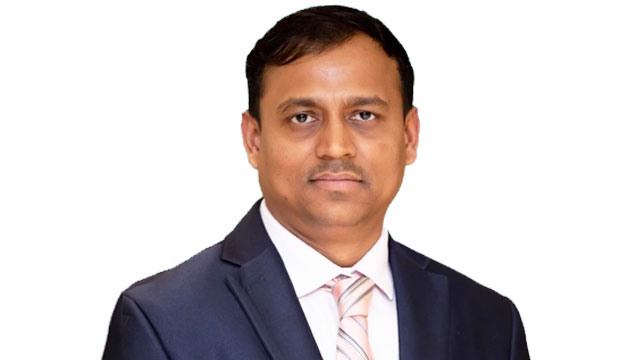
Dr. Arun Singh is the Global Chief Economist at Dun & Bradstreet. He leads the Global Economic Research Team, which provides country-level insights across 132 countries. The team focuses on macroeconomic research, economic modeling and forecasting. It is known for its practical and solution-driven analysis of key economic and business trends. This work supports better decision-making for corporates and governments and helps them stay ahead of economic developments.
Dr. Arun is a professional economist with more than twenty years of experience. His work covers both quantitative and qualitative economic research. He has deep expertise in econometric modeling, forecasting, analytics, commodity research, customized studies and industry research across multiple sectors. His research areas include the real economy, public finance, monetary and fiscal policy, the external sector, infrastructure and the social sector.
Before joining Dun & Bradstreet India, Dr. Arun worked with the Tata Group. There, he led in-depth research and analysis on a wide range of economic issues. He also contributed to treasury strategy for several group companies and supported long-term strategic planning across different businesses.
Dr. Arun holds a doctorate in economics from the University of Mumbai, India. He has also authored several thought leadership articles and research papers on topics of business and economic importance.
About the Interviewer
Mahima Sharma is an Independent Senior Journalist based in Delhi NCR with a career spanning TV, Print, and Online Journalism since 2005. She has played key roles at several media houses including roles at CNN-News18, ANI, Voice of India, and Hindustan Times.
Founder & Editor of The Think Pot, she is also a recipient of the REX Karmaveer Chakra (Gold & Silver) by iCONGO in association with the United Nations. Since March 2022, she has served as an Entrepreneurship Education Mentor at Women Will, a Google-backed program in collaboration with SHEROES. Mahima can be reached at media@indiastat.com
Disclaimer : The facts & statistics, the work profile details of the protagonist and the opinions appearing in the answers do not reflect the views of Indiastat or the Journalist. Indiastat or the Journalist do not hold any responsibility or liability for the same.
"$58.85B FDI Shows Global Investors Still See India’s Potential"... Read more










.png)